
The nervous system plays a central role in how the body responds to stress, recovers from activity, and maintains overall wellness. Every movement, sensation, and internal process is guided by complex communication between the brain, spinal cord, and peripheral nerves.
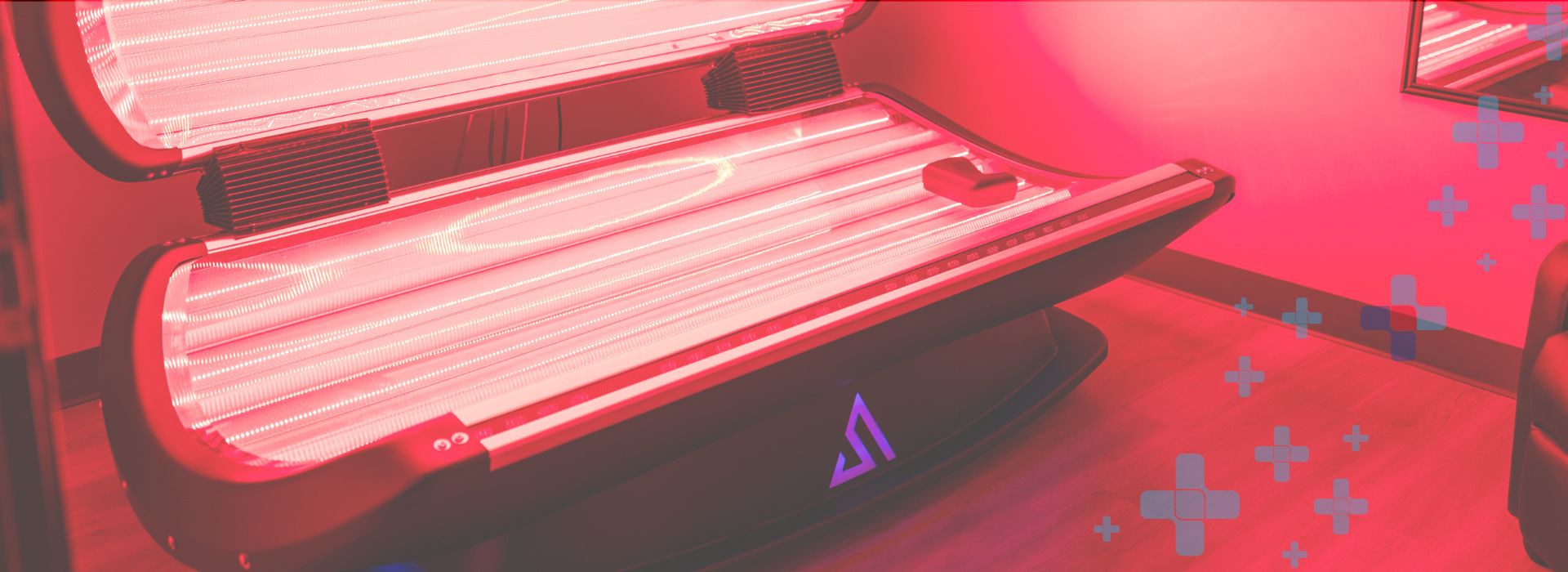
Photobiomodulation is increasingly used in wellness and recovery environments for its ability to support nervous system regulation at a cellular and signaling level. Rather than stimulating or suppressing nerve activity directly, this light based approach works by supporting the biological processes that allow the nervous system to function efficiently.
If you are new to photobiomodulation, we recommend starting with our foundational article,
What Is Photobiomodulation and How Does It Support Cellular Recovery,
which explains how light interacts with cells throughout the body.
Why Nervous System Balance Matters for Wellness
The nervous system is responsible for regulating both voluntary actions, such as movement, and involuntary processes, such as heart rate, digestion, and breathing.
For wellness and recovery, balance between different branches of the nervous system is essential. Efficient regulation allows the body to shift between activity and rest as needed, supporting recovery, energy conservation, and adaptability.
When the nervous system operates efficiently, communication between cells, tissues, and organs remains coordinated and responsive.
The Role of the Autonomic Nervous System
The autonomic nervous system governs many automatic functions in the body and is commonly described as having two primary branches.
- The sympathetic branch supports alertness and activity
- The parasympathetic branch supports rest, recovery, and restoration
Wellness focused recovery is not about favoring one branch over the other, but about maintaining the ability to transition smoothly between states based on demand.
Photobiomodulation is explored as a supportive tool for helping the nervous system maintain this adaptability.
How Photobiomodulation Interacts With Nervous System Cells
Nerve cells, like all cells in the body, rely on mitochondria to produce energy. Efficient energy production is essential for nerve signaling, communication, and maintenance.
As outlined in our article on cellular energy,
How Photobiomodulation Supports Mitochondrial Health and Cellular Energy,
photobiomodulation supports mitochondrial efficiency through light absorption.
By supporting energy availability at the cellular level, photobiomodulation helps create conditions where nerve cells can maintain normal signaling and responsiveness.
Light Exposure and Neural Communication
Neural communication depends on the movement of electrical signals and the release of neurotransmitters. These processes are energy dependent and sensitive to cellular health.
Photobiomodulation does not stimulate nerves directly. Instead, it supports the cellular environment that allows neurons to function efficiently.
This indirect support aligns with wellness focused approaches that prioritize balance rather than forced stimulation.
Circulation, Oxygen, and Nervous System Support
The nervous system requires consistent oxygen and nutrient delivery to maintain performance. Efficient circulation plays a key role in supporting neural tissue.
As discussed in our article on circulation,
How Photobiomodulation Supports Circulation and Oxygen Delivery for Recovery,
photobiomodulation can influence vascular signaling pathways related to blood flow.
By supporting circulation at the cellular signaling level, photobiomodulation helps create an environment that supports nervous system health and adaptability.
Red and Near Infrared Light and Nervous Tissue
Both red and near infrared light are used in photobiomodulation to support different tissue depths.
As explained in our wavelength focused article,
Red vs Near Infrared Light Therapy,
near infrared light penetrates deeper into tissue than visible red light.
This deeper penetration allows near infrared light to interact with neural structures located beneath the surface, supporting cellular processes within nervous tissue.
Photobiomodulation and Stress Adaptation
Stress places increased demand on the nervous system. Adaptation requires energy, efficient communication, and recovery capacity.
Photobiomodulation supports the cellular foundations that allow the nervous system to respond to stress and return to baseline more efficiently.
This makes light based therapies appealing for individuals focused on resilience, recovery, and long term wellness.
How Photobiomodulation Is Used in Nervous System Focused Wellness Settings
In wellness focused environments, photobiomodulation sessions are designed to deliver consistent, research aligned light exposure without overstimulation.
Sessions may be applied to targeted areas or broader regions depending on individual wellness goals. The emphasis remains on supporting cellular and neural efficiency rather than creating immediate sensations.
You can learn more about how LaserLab integrates photobiomodulation into nervous system supportive wellness routines by visiting our
targeted laser therapy
page.
How Often Is Photobiomodulation Used for Nervous System Support?
Photobiomodulation is typically used consistently over time. Regular exposure supports gradual cellular adaptation rather than immediate changes.
Many individuals incorporate sessions into weekly wellness routines alongside movement, rest, and recovery practices.
Safety Considerations for Nervous System Focused Photobiomodulation
Photobiomodulation is widely regarded as safe when delivered using appropriate wavelengths, power levels, and protocols.
Because it does not rely on heat or tissue disruption, it is well tolerated and suitable for repeated use in wellness focused settings.
Why Nervous System Support Is Essential for Long Term Wellness
The nervous system coordinates nearly every function in the body. Supporting its efficiency and adaptability is foundational to wellness, recovery, and performance.
Photobiomodulation offers a science supported way to encourage nervous system balance by working at the cellular and energetic level.
Bringing It All Together
Photobiomodulation supports nervous system balance by enhancing cellular energy, circulation, and neural efficiency rather than forcing direct stimulation.
This gentle, wellness first approach makes light based therapies a valuable addition to recovery focused routines.
When used consistently, photobiomodulation helps create the internal conditions needed for nervous system regulation, resilience, and long term wellness.