
As photobiomodulation becomes more widely used in wellness and recovery settings, one of the most common questions people ask is about the difference between red light and near infrared light. While both are forms of light therapy, they interact with the body in distinct ways and serve different biological roles.
Understanding how these wavelengths work can help clarify why many advanced photobiomodulation systems use a combination of both. This article explains the science behind red and near infrared light, how they affect the body, and why each plays an important role in supporting cellular recovery and overall wellness.
If you are new to photobiomodulation, you may want to start with our introductory article,What Is Photobiomodulation and How Does It Support Cellular Recovery, which provides a foundational overview of how light therapy works at the cellular level.
What Is Red Light Therapy?
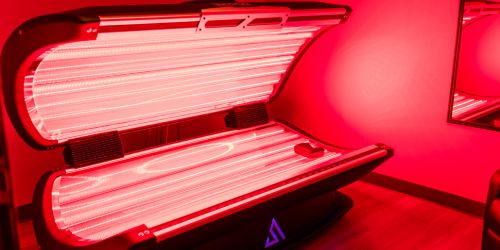
Red light therapy typically uses wavelengths in the range of approximately 630 to 660 nanometers. These wavelengths are visible to the human eye and appear as a deep red glow during treatment.
Red light primarily affects tissues closer to the surface of the body. This includes the skin, superficial muscles, and connective tissue near the surface.
At the cellular level, red light is absorbed by mitochondria, where it supports cellular energy production and efficiency. Because of its interaction with surface level tissue, red light is often used in wellness routines that focus on skin health, circulation near the surface, and general cellular support.
What Is Near Infrared Light Therapy?
Near infrared light uses wavelengths typically ranging from about 800 to 880 nanometers. These wavelengths are not visible to the human eye, but they penetrate deeper into the body than red light.
Near infrared light can reach deeper muscles, joints, and connective tissues. This deeper penetration allows it to interact with cells that are not accessible with visible red light alone.
Like red light, near infrared light is absorbed by mitochondrial components involved in energy production. The difference lies primarily in how far the light can travel through tissue.
Why Tissue Penetration Matters
One of the most important distinctions between red and near infrared light is tissue penetration depth.
Red light is effective for supporting surface and near surface tissues, while near infrared light reaches deeper structures. This difference is why many photobiomodulation systems use both wavelengths together rather than choosing one over the other.
By combining red and near infrared light, a broader range of tissues can be supported at the cellular level, creating a more comprehensive wellness and recovery experience.
How Red and Near Infrared Light Support Cellular Energy
Both red and near infrared light interact with mitochondria, the structures responsible for producing adenosine triphosphate, or ATP.
As discussed in our article on mitochondrial health, How Photobiomodulation Supports Mitochondrial Health and Cellular Energy, mitochondria absorb light energy through enzymes involved in the electron transport chain.
This interaction can improve mitochondrial efficiency, allowing cells to produce energy more effectively. Whether the light is red or near infrared, the goal is the same: supporting cellular energy availability so the body can better manage recovery and adaptation.
Red vs Near Infrared Light for Circulation Support
Circulation plays a critical role in wellness and recovery. Oxygen and nutrients must be delivered to tissues efficiently, while metabolic byproducts are removed.
Research suggests that photobiomodulation can influence nitric oxide signaling, which plays a role in vascular function. Both red and near infrared light may contribute to this process, though near infrared light can influence deeper vascular structures due to its penetration depth.
Supporting healthy circulation helps create an environment where cells can perform their normal functions more efficiently.
Why Many Wellness Systems Use Both Wavelengths
Rather than viewing red and near infrared light as competing options, most advanced photobiomodulation systems use them together.
Red light supports surface-level tissues and skin adjacent structures, while near infrared light reaches deeper muscle and connective tissue. Using both wavelengths allows for a layered approach to cellular support.
This combined strategy aligns with wellness-focused goals by addressing the body as an interconnected system rather than isolating a single tissue depth.
How Red and Near Infrared Light Are Used in Wellness Settings
In wellness-focused environments, photobiomodulation sessions are designed to deliver consistent, research-aligned light exposure using medical-grade systems.
Sessions may target specific areas or larger regions of the body, depending on individual wellness and recovery goals. The emphasis is on supporting cellular efficiency rather than creating a localized response.
You can learn more about how LaserLab uses these wavelengths in a structured wellness approach by visiting our targeted laser therapy page.
Common Questions About Red and Near Infrared Light Therapy
Is one wavelength better than the other?
Neither red nor near infrared light is universally better. Each serves a different biological purpose based on tissue depth. Many wellness protocols use both for comprehensive support.
Can you feel red or near infrared light during a session?
Most people experience little to no sensation during photobiomodulation sessions. The light does not rely on heat, so treatments are generally comfortable.
How long does it take for cells to respond to light therapy?
Cellular responses occur during and after light exposure, but wellness benefits are typically associated with consistent use over time rather than a single session.
Safety Considerations for Red and Near Infrared Light
Photobiomodulation using red and near infrared light is widely regarded as safe when delivered using appropriate wavelengths, power levels, and protocols.
Unlike high-powered or ablative lasers, these wavelengths do not damage tissue or rely on thermal effects. This makes them suitable for repeated use in wellness and recovery-focused applications.
Why Wavelength Selection Matters for Long Term Wellness
Wellness is about supporting foundational biological processes over time. Choosing the right wavelengths ensures that light therapy works with the body rather than against it.
Red and near infrared light are uniquely suited for interacting with human tissue in a way that supports cellular energy, circulation, and recovery.
As research continues to expand, wavelength-specific photobiomodulation is likely to remain a core component of science-informed wellness strategies.
Bringing It All Together
Red and near infrared light each play a valuable role in photobiomodulation. Their differences in penetration depth allow them to support different layers of tissue while working toward the same cellular goals.
By understanding how these wavelengths interact with the body, individuals can make more informed decisions about incorporating light-based therapies into their wellness and recovery routines.
When used consistently and responsibly, photobiomodulation offers a non-invasive, research-supported way to support cellular efficiency and long-term wellness.